


Geriatrics(Part-2): Balance problem in Elderly
- Jul 20, 2018
- 3 min read

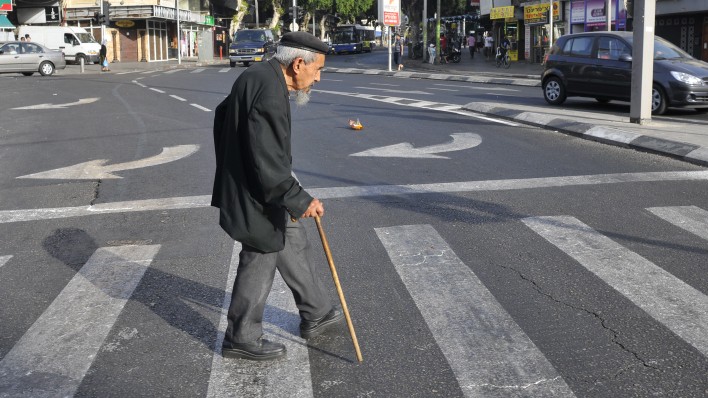

Falls are one of the major problems in the elderly and are considered one of the “Geriatric Giants”. Recurrent falls are an important cause of morbidity and mortality in the elderly and are a marker of poor physical and cognitive status.
Most common reasons of fall in elderly:
- Vision may decrease which can lead to falls due to not seeing clearly. - Hips and legs can become weaker making it harder to walk. - Poor posture or have spinal degeneration making it harder to stand erect. - Ability to lift our feet decreases and we can stumble. - It takes longer to react when something is in our way causing us to fall. - Many drugs interact causing dizziness or decrease balance.
Three sensory system which helps to balance our body :
* Sensory information from your eyes Visual cues come from our eyes and tell us all sorts of information about our environment. Our eyes help us see and prepare for dangers and obstacles which can prevent falls.
* Sensory information from your vestibular system The inner ear also contains a fluid-filled semi-circular canal which gives us important information on the position of our head and its movement in space in relation to gravity
* Sensory information from your joints Sensory feedback from your ankles, knees and hips, helps keep us upright and stable as we walk, run, or dance.
When all these systems are working together automatically with our musculoskeletal system we can stay active and independent, preventing falls and improving your elderly balance.
Make sure you check with your doctor if you suspect a more serious balance problem involving vertigo, ear infections, Meniere’s disease, chronic dizziness or drug interactions.That is why beginning a balance program for elderly and seniors which incorporates strength training, endurance training and balance training is essential in maintaining and promoting good balance.
Recommendation:
There are often many factors involved with decreased balance as we age, a lot of this decline is simply due to our inactivity. This can usually be improved with training.
This training will involve improving your overall upper and lower body strength along with challenging your balance system daily with activities that require you to use the three systems we spoke of above.
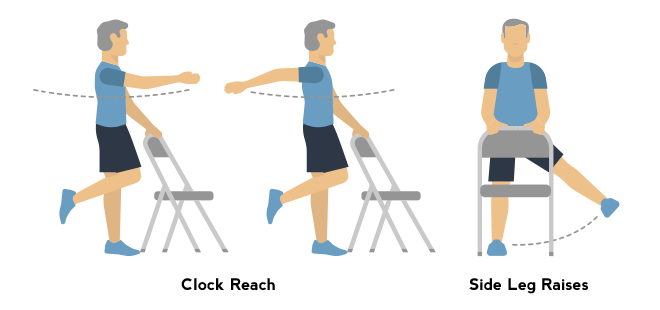
Use a chair as a place to not only perform seated exercise but also to hold on to while standing. Hold on with your finger, one hand or two hands. Always get up slowly when rising from a chair.
Don’t close your eyes when exercising or standing at your chair.
Smooth Bottom Shoes: Try not to wear shoes with tacky rubber or trail type shoes. These will catch on the carpet and floor which may result in tripping. ( use one with leather bottom )
Kitchen Counter: A kitchen counter to hold on to. This is a great place to walk when you are just beginning your balance exercise program. Simply hold on to the counter with one hand for balance while you step forward, sideways etc.
Object to step over: You need to step over during your stepping exercises. The height should be less than 6’’
Take some colour tape, place a line of it down your hallway or in your living room. And start gait training along with that line. It is especially helpful with sideways movements as these are the hardest to remain straight when performing elderly balance exercises.
Never do something that you are nervous about by yourself. Much better to have a helpful, stable person around to make you more confident and secure.
*For exercises read next article ( Geriatrics part-3)
Comments