


EXAMS, ERGONOMICS AND EXCELLENCE
- Dec 22, 2019
- 4 min read
How ergonomics can define your academic performance. How ergonomics can define your academic performance.

Have you ever come out of an exam with either back pain or neck pain or stiff and swollen fingers? We all blame it on the lengthy papers and stress. However, what we overlook is the role of the infrastructure within the examination centre. Multiple surveys and researches over the years confirm that students complain of neck pain, back pain and leg soreness after an hour's lecture. One can gauge the cumulative impact after a 2-3 hour examination. To add on to the physical trauma, we have the stress of completing the paper and reproducing the studied data. According to studies, the productivity of the students in the exam hall drastically decreases on account of physical discomforts.
As we speak about occupational health of various workers, we always tend to overlook the occupation of a student. A student spends his days and nights studying and writing exams in the same position for long hours. We need to pay equal importance to their occupational health and like any other occupation, the occupation of the student also has correlations with ergonomics.

Firstly, let’s understand the ideal posture for students in an exam or a lecture hall. For writing, shoulder should be in slight flexion, abduction and internal rotation with elbow in flexion and forearm in mid prone position. The grip of holding a pen/pencil varies from person to person amongst dynamic tripod grasp, three jaw chuck and other styles.
Sustaining the correct posture with the waist in slight flexion and neck in flexion requires concentrated efforts. Problems amplify when the chairs and desks are inappropriate in terms of width, height, depth, length or quality.


As illustrated in the above table, the various issues can arise due to an adapted posture. Research substantiates that neck pain and back pain can elevate on account of either lower desk heights or inappropriate chair-desk clearance and distance. Shoulder abduction, elevation can increase with higher desk heights. Hip pain, leg soreness will increase with impinging chairs on the popliteal fossa or flat sitting surface with no buttock clearance. Back pain also increases due to no lumbar back support. Conventional chairs have a rigid seat that inclines backwards and merges into a seating hollow causing: Lack of blood circulation, a rounding of the back, tense shoulder, neck, and back muscles, the spinal cord to be pressed to one side, a constriction of the digestive organs. Sustained pressure or force on the muscles and joints can cause discomfort and pain. As the Golden rule states with proximal stability comes your distal movement. Such designs and posture hamper the productivity in the exam and increases the body stress level during the examination period.

Are any solutions available to avoid these problems or correct it? Yes, there are! A simple change can make a big difference. In a country like India, where academics is given utmost importance, we tend to ignore one's physical and mental health. It is due time to bring a change. During the exam duration, a 30-40 sec break should be introduced after every 1 hour for students to adjust their posture, stretch their limbs to undo the accumulated stress caused by the sustained postures. This will encourage them to comply to such actions, without the fear of losing out on the time. Stretches like,eye rotations, neck lateral flexion, spinal rotation, scapular rotation/rolling, finger movements, and wrist rotations, sit-stand to free the legs should be taught during the academic year and made to practice in school, college practice exams.

We have discussed some solutions at the individual level, now we should focus on the role that should be played by colleges and universities to make the exam halls and classrooms more Ergonomic friendly. Proper design of ergonomic classroom infrastructure is required for maintaining good and pain free posture in and out of the classroom which in turn is necessary to improve academic performance and learning. Ergonomically suitable and yet economically feasible chairs and desks can be designed with
adjustable features in it as per the anthropometric data of the country. It should be taken into consideration to design a few equipments for the people on the plus side of the body weight. The seat and the desk slope should be within comfortable limits. The chair and the desk should be separate allowing to adjust the distance between
the two. If the provision is of a big lecture hall, the seats should have an adjustable extension to pull it ahead or likewise.
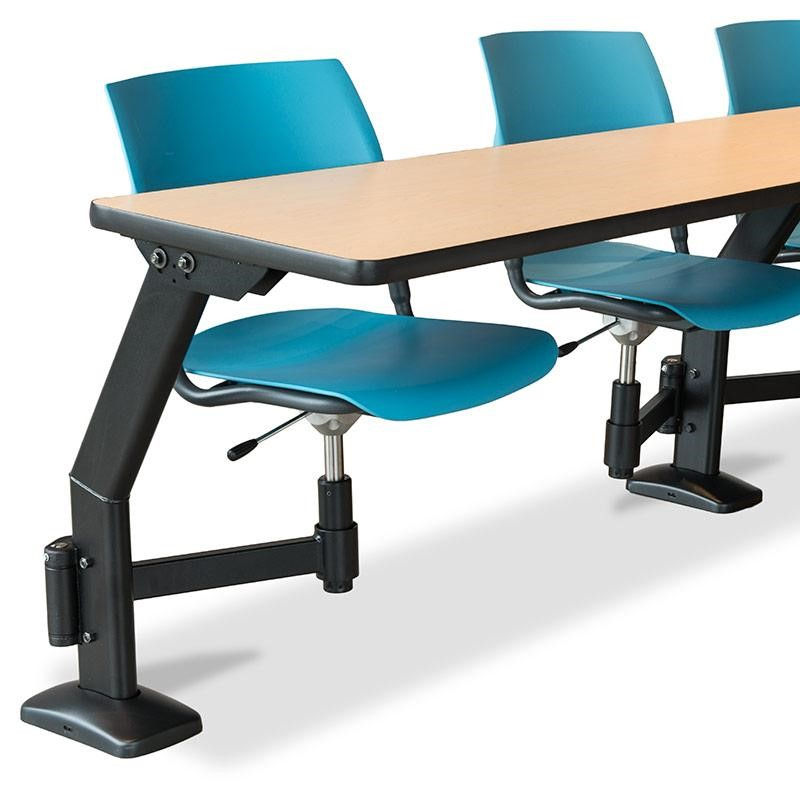
The desk should be at the elbow level for
proximal stability and to provide a proper eye level. The distance between two candidates should be sufficient enough for easy placement of the supporting arm on the desk. Foot rests should be provided for maintaining the foot flat. This provides an option to the students to keep their legs in a 90 hip -90 knee -90 ankle position as per their heights. If possible, external lumbar support pillows should be made available in absence of backrest which do not have a lumbar curvature support. A mass production/adaptation of such furniture equipment from the management side, will not only help increase productivity, decrease the painful after effects but also save a lot of monetary funds in a country with fiscal restraints. Individual expenses for pain relief and overall health care costs can also be avoided.
The last but not the least is the intervention for cognitive overload which every student goes through in the exam. This can be given as a preventative measure. Various coping and learning techniques along with stress management should be inculcated within the students. Ergonomics at school can be the first step in building a better future for this nation. Go knock on a door of an ergonomist!!
Article references:
http://hfem.org/wp-content/uploads/2017/09/Paper-4-THE-ERGONOMICS-OF-SEAT-DESIGN-IN-LECTURE-HALL-AT-FMHS-UPM-V2.pdf
https://www.ncbi.nlm.nih.gov/pmc/articles/PMC3915023/
https://www.umanitoba.ca/faculties/kinrec/bsal/miniu/summer/backpacks.pdf
Image references:
https://www.google.com/url?sa=i&rct=j&q=&esrc=s&source=images&cd=&cad=rja&uact=8&ved=2ahUKEwjKi46giarlAhWKK48KHbetCgoQjB16BAgBEAM&url=https%3A%2F%2Fwww.theclassroom.co%2Fwriting-tablet-lecture-chairs%2Fintellect-wave-4-leg-with-tablet.html&psig=AOvVaw3jMuZxNRUxQf7oB9aTDMRW&ust=1571634549717280
https://www.google.com/url?sa=i&rct=j&q=&esrc=s&source=images&cd=&cad=rja&uact=8&ved=2ahUKEwjLqvOQiqrlAhWPiXAKHTtqCqkQjB16BAgBEAM&url=https%3A%2F%2Fwww.iconfinder.com%2Ficons%2F530506%2Fchair_desk_chair_exam_chair_office_chair_student_chair_student_in_classroom_student_in_examination_hall_swivel_swivel_chair_icon&psig=AOvVaw30M3Oi9f35uo7sewE2X29n&ust=1571634780409955
https://www.google.com/url?sa=i&rct=j&q=&esrc=s&source=images&cd=&cad=rja&uact=8&ved=2ahUKEwiMmaDSjqrlAhXLqY8KHUczA0gQjB16BAgBEAM&url=https%3A%2F%2Fmedium.com%2F%40venkateshsethu%2Fa-day-at-exam-hall-92f71ffbe2be&psig=AOvVaw2QUy6Ohe28V2fIChNN0HcA&ust=1571636022027400
https://www.google.com/url?sa=i&rct=j&q=&esrc=s&source=images&cd=&cad=rja&uact=8&ved=2ahUKEwi27omuzKrlAhXGqY8KHQpxD2gQjB16BAgBEAM&url=https%3A%2F%2Fwww.thepremieretouch.com%2FFor-your-Health.html&psig=AOvVaw17HO5iq6eEuPl1lQQTDYqK&ust=1571652215496463
https://www.google.com/url?sa=i&rct=j&q=&esrc=s&source=images&cd=&cad=rja&uact=8&ved=2ahUKEwiSvLCR0KrlAhWBRY8KHQHjCzsQjB16BAgBEAM&url=https%3A%2F%2Fwww.pinterest.com%2Fpin%2F458663543278254785%2F&psig=AOvVaw1rctUstPF8ZHgycl-6m0_v&ust=1571653557782976
Comments